If your cat or dog has ever struggled with persistent coughing, wheezing, or labored breathing, you know how scary and helpless it can feel. Respiratory issues in pets are surprisingly common, and when they strike, you want fast, gentle relief that actually works. That’s where a
pet nebulizer comes in — a simple, effective tool that can make a world of difference for your furry friend’s comfort and recovery.
Common Respiratory Conditions in Pets (And Why They Happen)
Pets can develop respiratory problems for many reasons, from infections to chronic conditions. Here are the most common ones you might encounter:
1. Feline Asthma (Allergic Bronchitis)
Cats, especially indoor cats, are prone to asthma — a chronic inflammatory condition of the airways.
Why it happens: It’s often triggered by allergens like dust mites, mold, pollen, cigarette smoke, or even scented cat litter. Stress, obesity, and viral infections (like feline herpesvirus) can also worsen symptoms.
Signs: Wheezing, repeated coughing (often mistaken for hairballs), open-mouth breathing, and lethargy.
2. Canine Bronchitis ("Kennel Cough")
Dogs of all ages can get infectious bronchitis, commonly known as kennel cough.
Why it happens: It’s usually caused by a mix of viruses (like parainfluenza) and bacteria (like Bordetella), spread through close contact with other dogs in shelters, groomers, or dog parks. Chronic bronchitis can also develop in older dogs, especially those exposed to secondhand smoke or poor air quality.
Signs: A dry, honking cough that gets worse with excitement or exercise, sneezing, and mild fever.
3. Upper Respiratory Infections (URIs)
Both cats and dogs can get URIs, similar to human colds.
Why it happens: Viral (e.g., feline herpesvirus, calicivirus in cats) or bacterial infections spread through contact with sick animals, contaminated food bowls, or toys. Kittens, puppies, and immunocompromised pets are most at risk.
Signs: Runny nose, watery eyes, sneezing, congestion, and difficulty breathing through the nose.
4. Chronic Obstructive Pulmonary Disease (COPD)
More common in older pets, especially small dogs like Yorkies or Shih Tzus, COPD is a progressive condition that damages the airways over time.
Why it happens: Long-term exposure to irritants (smoke, dust, pollution) or repeated respiratory infections can lead to permanent airway narrowing.
Signs: Persistent cough, difficulty breathing, reduced activity levels, and fatigue.
Why a Nebulizer Is the Best Option for These Conditions
You might be wondering: Why not just give my pet oral medications or antibiotics? While those have their place, nebulization offers unique benefits that make it ideal for respiratory issues:
-
Targeted Relief, Faster ResultsNebulizers turn liquid medication into a fine mist that your pet inhales directly into their lungs. This means the medicine goes straight to the source of the problem — the inflamed airways — rather than traveling through the entire digestive system first. For conditions like asthma or bronchitis, this can reduce symptoms in minutes, not hours.
-
Gentler on Your Pet’s BodyOral medications often come with side effects (like upset stomach or diarrhea) because they affect the whole body. Nebulization delivers medication locally, so you can use lower doses with fewer systemic side effects. This is especially important for pets with chronic conditions who need long-term treatment.
-
Safe for All Ages & SizesFrom tiny kittens and puppies to senior pets with weakened immune systems, nebulization is a low-stress, non-invasive treatment. It works even for pets who struggle with pills or syringes, making it a lifesaver for anxious or sick animals.
-
Hydrates & Clears Irritated AirwaysEven without medication, plain saline nebulization can help loosen mucus, soothe inflamed airways, and make breathing easier. This is especially helpful for pets with URIs or kennel cough, where congestion is a major issue.
Why Our Portable Pet Nebulizer Is the Perfect Choice for Your Furry Friend
Not all nebulizers are created equal — and for pets, convenience, safety, and effectiveness are non-negotiable. Here’s why our nebulizer stands out from the rest:
1. Vet-Approved Particle Size for Deep Lung Delivery
The key to effective nebulization is particle size. Our device produces a fine mist with particles smaller than 5µm, which is the ideal size to reach deep into your pet’s lungs. Combined with a flow rate of ≥0.2 ml/min, it ensures that medication is delivered efficiently, so your pet gets the maximum benefit from every treatment.
2. Ultra-Quiet Operation for Stress-Free Sessions
We know how easily pets get scared by loud noises — especially when they’re already feeling unwell. Our nebulizer operates at less than 25dB, quieter than a whisper. That means no more hiding, trembling, or struggling during treatments. Even skittish cats and anxious dogs can relax while they breathe easier.
3. Portable & Rechargeable for Use Anywhere
Our lightweight, cordless design makes it easy to use at home, in the car, or even at the vet’s office. It’s powered by a 2000mAh rechargeable lithium battery that runs for up to 6 hours on a full charge — enough for 30 daily treatments. No need to hunt for an outlet or be tied down by cords.
4. Easy to Clean & Maintain
Hygiene is critical when dealing with respiratory issues, and our nebulizer makes it simple. It features an auto-clean mode: just add warm pure water (30°C~60°C), hold the power button for 5 seconds, and let it run for 1-2 minutes to clean the internal components. No complicated disassembly required.
5. Multiple Masks for Every Pet
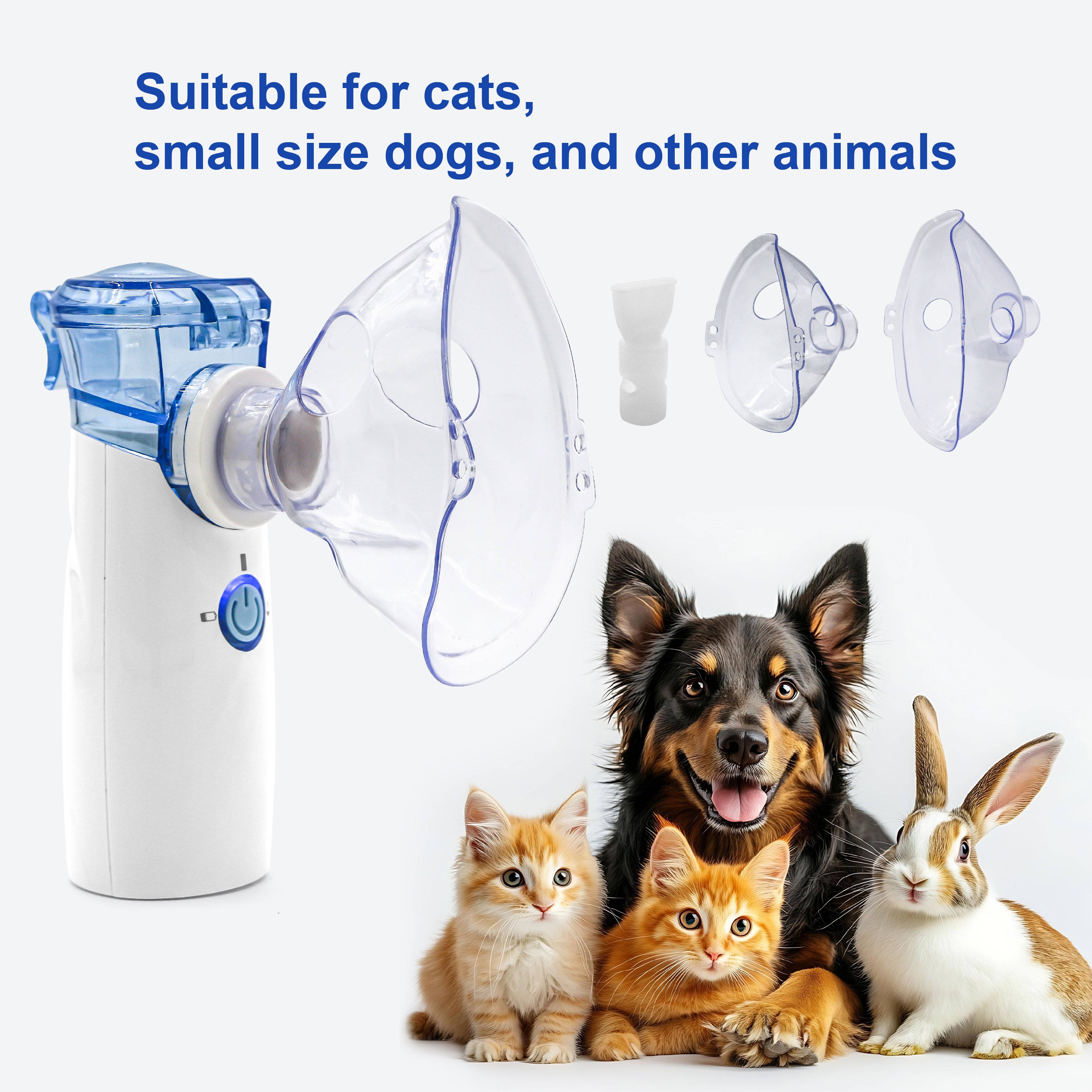
We include three different mask sizes, so you can find the perfect fit for your cat, small dog, rabbit, or other small animal. A snug, comfortable mask ensures that more medication reaches your pet’s lungs, instead of escaping into the air. Plus, the clear design lets you see exactly what’s happening during treatment.
6. Simple One-Button Operation
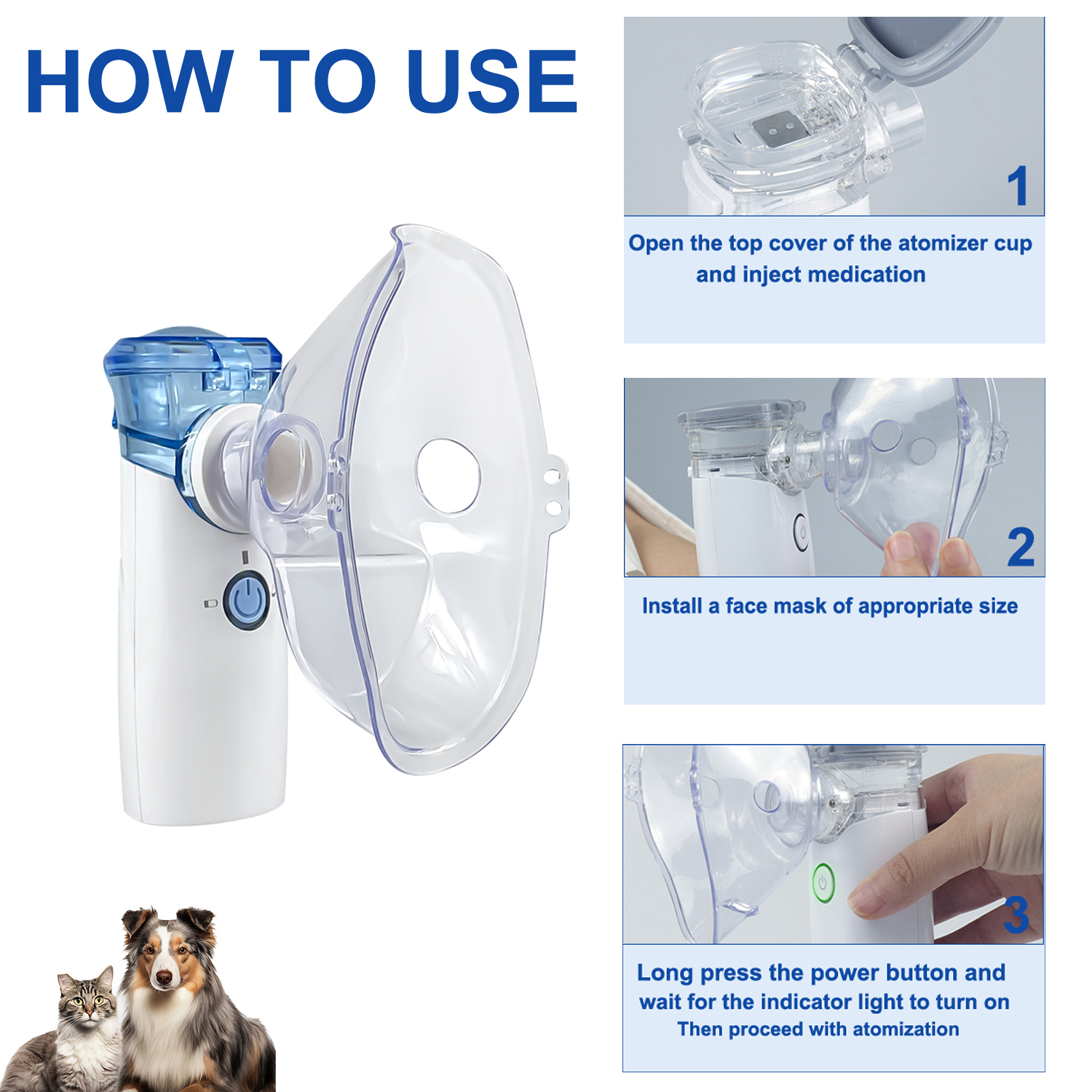
You don’t need to be a vet tech to use our nebulizer. Just add medication, attach the mask, long-press the power button, and wait for the indicator light to turn on. That’s it — no confusing settings or complicated instructions. It’s designed for busy pet parents who want a hassle-free solution.