As a new parent, every little cough, snuffle, or irregular breath can send your mind racing. Is this normal? Should I call the doctor? How do I know if my baby is getting enough oxygen? If these questions sound familiar, you're not alone — and a baby pulse oximeter might be the peace of mind you're looking for.
The Unspoken Anxiety of Every New Parent
You check on your sleeping baby ten times a night. You lean in close to listen to their breathing. When they catch their first cold, you spend hours Googling "baby breathing fast while sleeping" and "when to worry about baby oxygen levels."
Here's the hard truth: babies can't tell you when they can't breathe well. They can't say, "My chest feels tight" or "I'm lightheaded." All you have are visual cues — and those aren't always reliable.
A pulse oximeter gives you something nothing else can: an actual number. It measures how much oxygen is in your baby's blood in real time, so you don't have to guess whether that blue-ish tint around the lips is just cold hands or something more serious.
When Does Your Baby Actually Need a Pulse Oximeter? 7 Common Scenarios
1. Your Newborn Just Came Home From the Hospital (CCHD Screening)
Every year, roughly 1 in 100 babies is born with a congenital heart defect (CHD), and about a quarter of those are critical — meaning they need surgery or intervention within the first year of life.
The scary part? many of these babies look perfectly healthy at birth. Their oxygen levels may drop only after the ductus arteriosus closes (usually 2–3 days after birth), which often happens after they've already been discharged home.
That's why hospitals use pulse oximetry screening (POS) between 24–48 hours after birth. But if you had an early discharge, a home birth, or just want continued peace of mind during those first fragile weeks, having your own infant pulse oximeter lets you keep tracking those numbers at home.
2. Your Baby Has a Cold, Fever, or Respiratory Infection
Colds are inevitable. But when your infant is congested, coughing, or running a fever, it's hard to tell if it's "just a cold" or something deeper like bronchiolitis, RSV, or pneumonia.
This is where a home pulse oximeter truly earns its place in your medicine cabinet.
During respiratory illnesses, babies can develop low oxygen levels (hypoxia) before they show obvious distress signs. By tracking SpO2 trends over a few days, you can:
- Catch early drops before things escalate
- Know whether a trip to the ER is necessary or if you can safely monitor at home
- Have concrete numbers to share with your pediatrician instead of just "they seem off"
3. You Notice Blue-ish Lips, Fast Breathing, or Chest Retractions
You've probably read about these warning signs a hundred times:
- Blue or pale lips, tongue, or skin around the mouth (central cyanosis)
- Rapid breathing — more than 60 breaths per minute in a newborn
- Chest retractions — the skin between the ribs pulls inward with each breath
- Nostril flaring or grunting sounds on exhalation
But here's the problem: by the time cyanosis is visible to the naked eye, oxygen levels are already dangerously low. A pulse oximeter catches drops before they become visually obvious, giving you precious time to seek help.
4. Your Baby Was Premature or Has a Known Heart/Lung Condition
For preemies, babies with asthma, or infants with known congenital heart conditions, oxygen monitoring isn't just about peace of mind — it's part of daily care.
Premature babies often have underdeveloped lungs and may experience apnea (pauses in breathing) or desaturation events, especially during sleep. A pediatric pulse oximeter with continuous monitoring lets you track these episodes and share data with your neonatologist or pediatric cardiologist without making weekly clinic trips.
5. Your Baby Snores or You Suspect Sleep Apnea
It might surprise you, but babies can have sleep apnea too — especially preemies and babies with conditions like Down syndrome.
During deep sleep, oxygen levels can dip without you noticing. A Bluetooth-enabled pulse oximeter that logs overnight readings can help you and your doctor identify patterns of nighttime desaturation, which is often the first step toward diagnosing obstructive sleep apnea (OSA) in infants and toddlers.
6. Post-Surgery or Recovery Period at Home
If your little one has had any procedure requiring anesthesia, or is recovering from pneumonia, bronchiolitis, or another respiratory illness, your doctor may recommend at-home oxygen monitoring during the recovery phase.
Having your own device means you don't have to rent expensive hospital equipment or wait for a home health nurse to stop by. You can track recovery trends yourself and flag any setbacks early.
7. You Simply Want Peace of Mind (And That's Okay)
Let's be honest — sometimes there's no "medical reason." You're a first-time parent, you worry, and you'd rather have the data and not need it than need it and not have it.
A pulse oximeter is like a baby thermometer for oxygen. You hope you never need it for an emergency, but when 2 a.m. rolls around and your baby sounds stuffy, you'll be so glad you have it.
What's a Normal Oxygen Level for a Baby?
For a healthy full-term baby breathing room air:
- Normal range: 95–100% SpO₂
- Mild concern: 92–94% — worth monitoring closely
- Seek medical attention: Below 92% — especially if sustained
Pulse rate for infants is naturally higher than adults:
- Newborns (0–1 month): 100–160 bpm
- Infants (1–12 months): 90–150 bpm
Keep in mind that readings can fluctuate slightly, and movement can cause temporary dips. What matters most is the trend over time and whether low readings persist even when your baby is calm and still.
How to Choose the Right Pulse Oximeter for Your Baby
Not all pulse oximeters work for infants. A standard adult finger clip won't fit tiny newborn fingers or feet properly, leading to inaccurate readings.
✅ Dedicated Infant/Neonatal Probe
Adult fingertip oximeters are designed for fingers at least a certain size. For babies, you need a soft silicone wrap probe that goes around the foot, wrist, or hand — something gentle enough for delicate newborn skin but secure enough for accurate readings.
✅ FDA-Certified / Clinically Validated Accuracy
Skip the cheap no-name brands. Look for devices with verified accuracy (typically ±2% in the 80–100% SpO₂ range) and FDA certification, so you can trust the numbers you're seeing.
✅ Bluetooth & App Tracking
A Bluetooth-enabled oximeter that syncs with a phone app is a game-changer for parents. It lets you:
- Log readings over time to spot trends
- Share data directly with your pediatrician
- Monitor continuously without staring at the device screen
- Set alarms for low oxygen or abnormal pulse rates
✅ Multiple Probe Sizes for Growing Kids
Babies grow fast. A device that only fits newborns becomes useless in a few months. Look for one with interchangeable probes for infants, kids, and adults — so it grows with your family and works for everyone in the household.
The
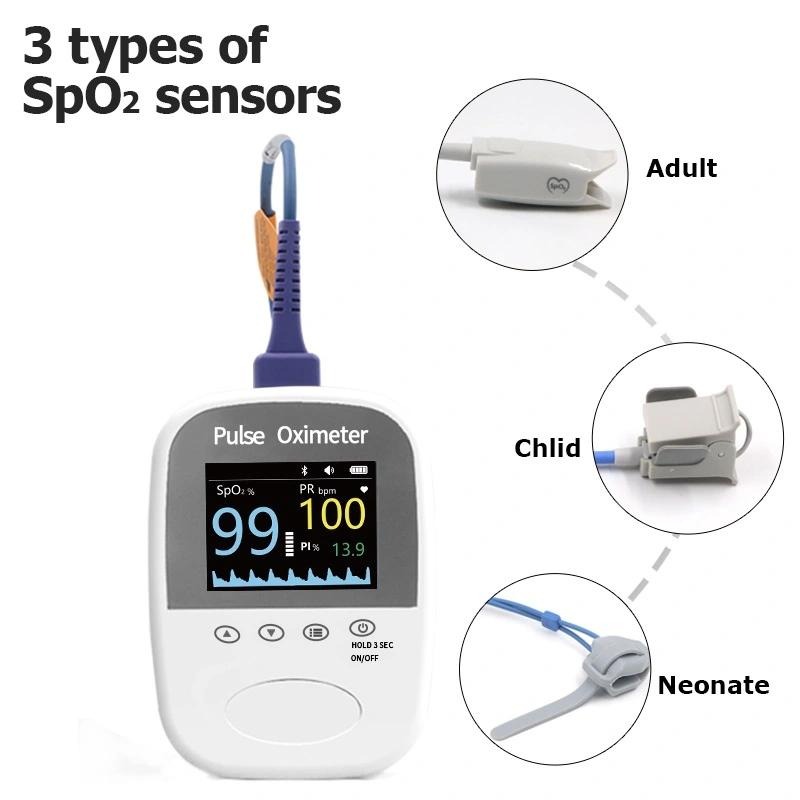
Pepultech BM1000A Pulse Oximeter checks every box on the list above — and then some. Here's why it's become a favorite among parents of infants and young kids:
Three Probes for the Whole Family
Unlike single-size oximeters, the BM1000A comes with three dedicated probes:
- A soft silicone infant probe for newborns and babies
- A sponge kids probe for toddlers and children
- A standard adult finger probe for parents and caregivers
One device works for your newborn today, your 5-year-old in a few years, and you right now. That's real value.
Hospital-Grade Accuracy You Can Trust
With ±2% SpO₂ accuracy in the critical 80–100% range and a fast 5–10 second response time, you're getting readings you can actually rely on — no guesswork, no inconsistent numbers. It's FDA-certified and built with an advanced filtering algorithm that handles even wiggly babies better than basic models.
Bluetooth + Berry Smart Health App
The built-in Bluetooth connects seamlessly to the Berry Smart Health app, turning your phone into a full monitoring station. You can:
- View real-time SpO₂ and pulse rate on a larger screen
- Save historical data and track daily/weekly trends
- Export reports to share with your pediatrician
- Monitor continuously during naps or overnight without hovering over the crib
Lightweight, Portable, and Battery-Powered
Powered by just 2 AAA batteries, it's small enough to toss in your diaper bag for doctor visits, travel, or grandma's house. No charging cables to forget, no bulky base station — just grab and go.
Works for All Skin Tones
The BM1000A is engineered to deliver accurate readings across all skin pigmentation levels, which is an important detail many cheaper oximeters overlook. Every baby deserves reliable numbers, regardless of complexion.
How to Use a Pulse Oximeter on Your Baby Correctly
Getting accurate readings on a wiggly baby takes a little practice. Here's the quick guide:
- Pick the right probe. Use the soft silicone infant probe for newborns — wrap it gently around the foot (the sole is ideal) or the palm/back of the hand.
- Wait for stillness. Readings are most accurate when your baby is calm, asleep, or resting. Movement causes artifacts.
- Give it 5–10 seconds. The Pepultech BM1000A locks onto a reading quickly, but wait for a stable number before recording it.
- Take multiple readings. A single dip might just be movement artifact. If you see a low number, reposition the probe and check again.
- Track trends, not single numbers. What matters is whether levels stay consistently low over several readings, not one blip.
Important: Home pulse oximeters are monitoring tools, not diagnostic devices. If your baby has sustained low oxygen readings, appears lethargic, has blue lips, or struggles to breathe, seek emergency medical care immediately.
The Bottom Line: Is a Baby Pulse Oximeter Worth It?
If you're a parent asking, "my baby is breathing fast — should I worry?" then yes, having a pulse oximeter at home is absolutely worth it.
It's not about replacing your pediatrician or diagnosing conditions yourself. It's about having objective data when you need it most. It's about knowing at 2 a.m. whether that stuffy breathing is just a cold or something that needs attention right now. It's about reducing the helplessness every new parent feels when their baby is sick.
The
Pepultech BM1000A is particularly well-suited for growing families because it adapts from newborn to adult with three interchangeable probes, offers FDA-verified accuracy, and includes Bluetooth app tracking for trend monitoring and easy sharing with your doctor.
At the end of the day, you can't put a price on peace of mind — but you can put a pulse oximeter in your diaper bag and sleep a little better knowing you're prepared.
Ready to stop guessing and start knowing? The Pepultech BM1000A Pulse Oximeter with 3 probes and Bluetooth is available now — one device for your newborn, your toddler, and everyone else in the family.
Disclaimer: The Pepultech BM1000A is designed for sports, aviation, and general wellness monitoring. It is not a medical device and should not be used for diagnosis or treatment of any medical condition. Always consult a healthcare professional for medical concerns and emergencies.


