High blood pressure is a common yet often overlooked health issue in dogs and cats, especially in senior pets. If left unmanaged, it can lead to serious complications affecting your pet’s eyes, kidneys, and heart. The good news is that with proper monitoring and care, you can help keep your furry friend healthy. This guide will walk you through what high blood pressure means for pets and how you can safely measure blood pressure at home with a pet blood pressure monitor.
Why Is High Blood Pressure a Concern for Pets?
Just like in humans, persistent high blood pressure in pets puts extra strain on vital organs. Common signs to watch for include:
- Sudden vision changes or blindness
- Increased thirst and urination
- Lethargy or reduced activity
- Seizures or disorientation
Many pets show no obvious symptoms until the condition has advanced, which makes
regular blood pressure monitoring essential. Early detection allows you and your veterinarian to take action before irreversible damage occurs.
How to Help Manage High Blood Pressure in Pets
Managing your pet’s blood pressure is a team effort between you and your vet. Here are key steps you can take:
- Follow your vet’s treatment plan: If your pet is diagnosed with high blood pressure, they may prescribe medication to keep levels stable. Never adjust doses without consulting your vet.
- Stick to a low-sodium diet: Many commercial pet foods are high in hidden sodium. Ask your vet for recommendations on a balanced, low-sodium diet tailored to your pet’s needs.
- Maintain a healthy weight: Obesity is a major risk factor for high blood pressure in pets. Regular exercise and portion control can help keep your pet at a healthy weight.
- Reduce stress: Nervous pets often experience temporary blood pressure spikes, even at the vet’s office. Creating a calm routine and using at-home monitoring can help you get more accurate readings.
How to Measure Your Pet’s Blood Pressure at Home
Measuring blood pressure at home is easier than you might think, especially with a veterinary blood pressure monitor designed specifically for dogs and cats. These devices use animal-specific algorithms to deliver accurate, stress-free readings. Here’s how to do it safely:
Step 1: Choose the Right Equipment
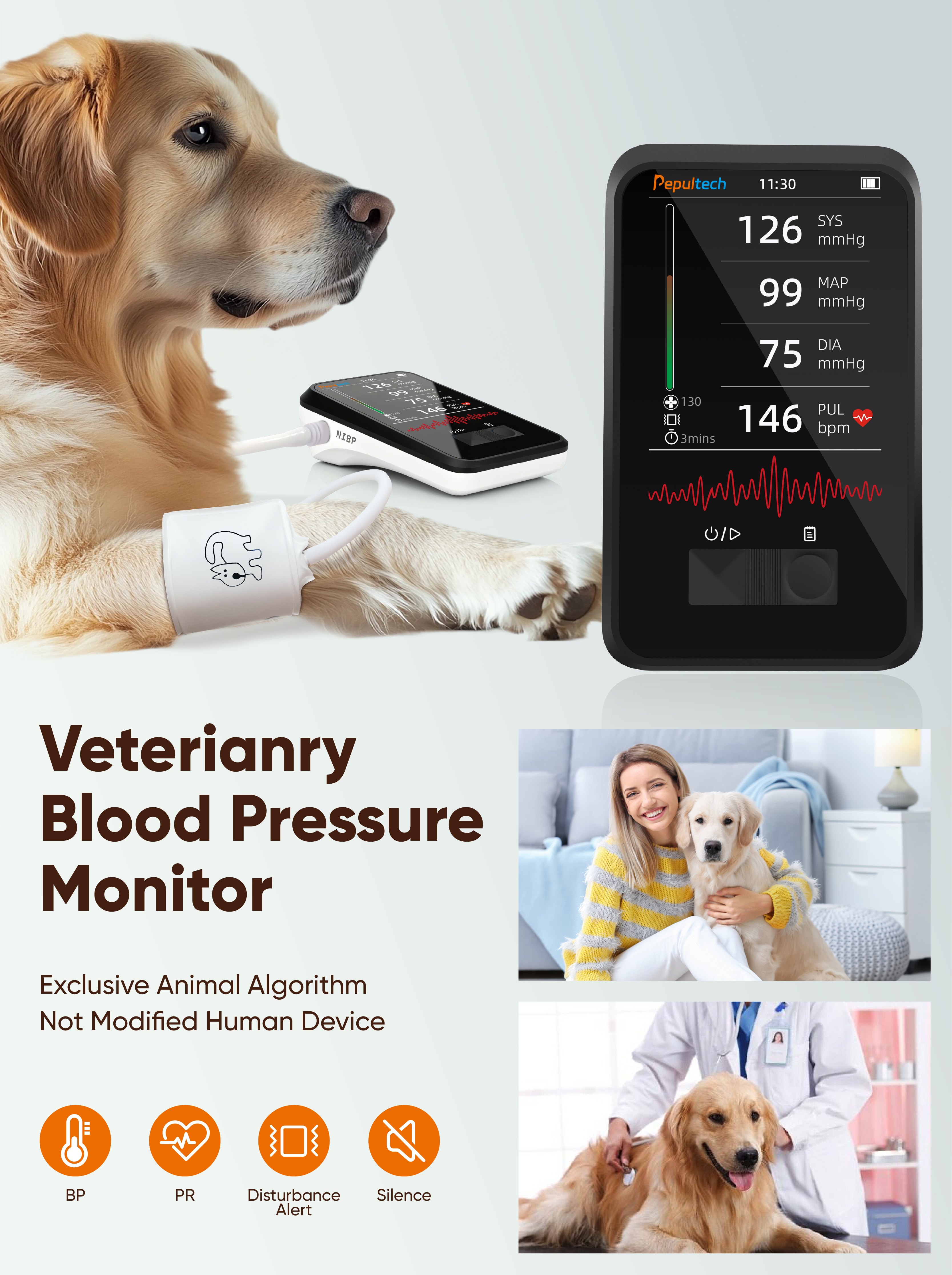
Invest in a high-quality monitor with the right accessories:
- Multiple cuff sizes: A proper fit is critical for accuracy. Look for a monitor like ours that includes 5 cuffs for different pets, from small cats to large dogs.
- Animal-specific algorithm: Avoid repurposed human devices, which often give unreliable readings. A dedicated pet blood pressure monitor ensures precision.
- Quiet operation: Loud inflation noises can stress pets. Our ultra-quiet design helps your pet stay calm for more accurate results.
Step 2: Prepare Your Pet and the Space
- Pick a quiet, familiar room where your pet feels relaxed.
- Keep sessions short—aim for 3-5 minutes to avoid stress.
- Let your pet get comfortable before starting. For nervous pets, try gentle petting or treats to create a positive association.
Step 3: Take the Reading
- Fit the cuff: Wrap the cuff snugly around your pet’s upper leg (front leg for dogs, hind leg for cats), following the manufacturer’s instructions.
- Power on the device: Our one-touch operation makes starting the test simple—no complex settings required.
- Stay calm and still: Keep your pet relaxed during the reading. Movement can affect accuracy, so speak softly and avoid sudden movements.
- Record the results: Note the systolic, diastolic, and pulse rate readings. Many monitors store up to 1000 groups of data, making it easy to track trends over time.
Step 4: Understand the Results
Share all readings with your vet, even if they seem normal. A pattern of high readings may indicate a problem that requires further investigation. Your vet can help interpret the numbers and adjust your pet’s care plan as needed.
Key Features to Look for in a Pet Blood Pressure Monitor
When choosing a monitor, prioritize these features for the best experience:
- Vet-approved accuracy: Look for monitors validated by veterinary standards to ensure reliable results.
- Anti-leak cuffs: Durable, properly sized cuffs prevent air leaks that can skew readings.
- Data storage and trend tracking: Being able to review past readings helps you spot changes over time.
- Long battery life: A rechargeable battery means you won’t run out of power mid-test, even during multiple sessions.
Final Thoughts
High blood pressure doesn’t have to be a scary diagnosis for your pet. With regular monitoring, proper care, and a little patience, you can help your furry friend live a long, healthy life. Investing in a quality animal blood pressure monitor gives you the power to take control of your pet’s health, detect issues early, and work with your vet to keep blood pressure stable.
If you’re ready to start monitoring your pet’s blood pressure at home, choose a monitor designed for their unique needs—one that combines accuracy, ease of use, and stress-free operation for both you and your pet.


