Healthy Baby Blood Oxygen Levels: What’s Normal and When to Worry
We use cookies to improve your online experience. By continuing browsing this website, we assume you agree our use of cookies.
Home > Blog > People Care > Healthy Baby Blood Oxygen Levels: What’s Normal and When to Worry

Healthy Baby Blood Oxygen Levels: What’s Normal and When to Worry

By pepultech September 3rd, 2026 51 views

As a parent, few things are more stressful than worrying about your baby’s health. One question that often comes up is: What should a healthy baby’s blood oxygen level be? Understanding normal oxygen saturation (SpO2) levels—and knowing what to do if they fall outside the healthy range—can give you peace of mind and help you act quickly when it matters most.

In this article, we’ll cover what normal SpO2 levels are for babies, signs of low oxygen, when to seek medical help, and how a reliable pulse oximeter can help you monitor your little one’s health at home.


What Is Blood Oxygen Saturation (SpO2)?

Blood oxygen saturation, or SpO2, measures the percentage of hemoglobin in your baby’s blood that is carrying oxygen. It’s a key indicator of how well your baby’s heart, lungs, and circulatory system are working together to deliver oxygen throughout the body. The most common way to measure SpO2 is with a pulse oximeter—a small, noninvasive device that clips onto a finger or toe and uses light to estimate oxygen levels.


What Is a Normal Blood Oxygen Level for a Baby?

For most healthy babies, a normal SpO2 reading falls between 95% and 100%.

However, there’s some nuance depending on the baby’s age and situation:

  • Newborns (first 24 hours of life): Healthy term infants typically have baseline SpO2 values ranging from 89% to 100%. One study found a median baseline SpO2 of 98.3% in healthy full-term infants during their first day of life. The mean SpO2 rises gradually after birth—from about 85.4% at 5 minutes to 97.4% at 30 minutes.
  • After the first 24 hours: Most guidelines recommend that healthy newborns should have SpO2 levels of ≥95%. The American Academy of Pediatrics (AAP) recently updated its screening recommendations to require SpO2 of 95% or greater in both the right hand and either foot for a newborn to pass the critical congenital heart disease (CCHD) screening.
  • Older infants (up to 2 years): Median nocturnal SpO2 values range between 98% and 99% over the first two years of life. Mean SpO2 at sea level for healthy infants and children is typically 97% to 99%.
    Important note: Many babies, particularly newborns, may temporarily have slightly lower oxygen saturation measurements hovering between 90% and 95%. This can be perfectly normal, especially as their circulation adjusts to life outside the womb.

SpO2 Ranges at a Glance

Age Group Normal SpO2 Range
Newborn (first 24 hours) 89–100%
Newborn (after 24 hours) ≥95%
Infants (up to 2 years) 97–99% (median)
Children 95–100%


What Does Low Blood Oxygen Mean for a Baby?

When a baby’s SpO2 drops below the normal range, it’s called hypoxemia—a condition where the blood doesn’t carry enough oxygen to meet the body’s needs. Low oxygen levels in infants can be caused by:

  • Respiratory infections (like bronchiolitis or pneumonia)
  • Congenital heart defects—pulse oximetry screening helps detect critical congenital heart disease (CCHD), which affects about 2 to 4 in every 1,000 births
  • Breathing difficulties or lung immaturity (especially in premature babies)
  • Adjustment to life outside the womb (temporary low readings in the first hours after birth)
  • Altitude—babies born at higher elevations may naturally have slightly lower SpO2 levels

Signs and Symptoms of Low Oxygen in Babies

Sometimes, low oxygen levels are obvious; other times, they can be subtle. Watch for these warning signs:

  • Cyanosis—a bluish or purplish discoloration of the skin, especially around the lips, mouth, fingers, or toes. Cyanosis typically becomes visible when SpO2 drops below 85%
  • Nasal flaring—the nostrils widen with each breath
  • Chest indrawing—the skin pulls in between the ribs or under the ribcage with each breath
  • Grunting—a sound made with each exhale
  • Head nodding—the head bobs with breathing efforts
  • Fast breathing (tachypnea)—respiratory rate of 70 breaths per minute or higher in infants
  • Lethargy—unusual sleepiness or difficulty waking
  • Poor feeding—the baby latches but seems too weak to suck effectively
  • Irritability or fussiness that doesn’t resolve with comforting

According to a study on infants under 2 months of age, signs like grunting, head nodding, nasal flaring, or central cyanosis are strong indicators of hypoxia and should prompt immediate medical attention.


What to Do If Your Baby’s Oxygen Level Is Abnormal

If you suspect your baby has low oxygen, don’t wait—act quickly.

1. Check with a Pulse Oximeter

If you have a pulse oximeter at home, use it to get a reading. A normal reading is above 95%. If the reading is below 92%, it’s a red flag that warrants immediate medical attention.

2. When to Call a Doctor or Go to the ER

Seek emergency care immediately if your baby:

  • Has bluish skin, lips, or nails

  • Is struggling to breathe (fast breathing, grunting, chest indrawing, or nasal flaring)

  • Is unusually lethargic or difficult to wake

  • Is refusing to feed or unable to suck

  • Has an SpO2 reading below 90–92%

Even if symptoms seem mild, if you’re concerned, call your pediatrician or go to the nearest emergency department. Early intervention can prevent serious complications like organ damage from prolonged oxygen deprivation.

3. Keep Your Baby Calm and Comfortable

While waiting for medical help:

  • Keep your baby in a calm, quiet environment—crying and distress can lower oxygen levels further

  • For babies with known congenital heart conditions who experience “blue spells,” placing them on their back with knees brought up to the chest may help

Do not attempt to give oxygen at home unless you have been specifically trained and prescribed equipment by a doctor

4. Follow Medical Advice

If your baby is diagnosed with low oxygen, treatment will depend on the underlying cause. This may include:
  • Supplemental oxygen delivered via nasal cannula or mask
  • Medications to treat infections or support heart function
  • Hospital monitoring in more severe cases


    Why Pulse Oximetry Matters for Baby Health

    Pulse oximetry has become a standard part of newborn care—and for good reason. The CDC reports that mandated CCHscreening using pulse oximetry reduces early infant deaths from critical congenital heart defects by 33%.

    The test is simple, painless, and noninvasive. A sensor is placed on the baby’s skin (usually on the right hand and one foot) to measure oxygen levels. Screening is typically performed when the baby is at least 24 hours old or just before hospital discharge.

    But monitoring shouldn’t stop at the hospital. Having a reliable pulse oximeter at home allows you to:

  • Track your baby’s oxygen levels during illness or recovery
  • Catch warning signs early before symptoms become severe
  • Give your pediatrician accurate information if you need to call or visit
  • Gain peace of mindespecially if your baby was born premature or has known health conditions


Choose a Trusted Pulse Oximeter for Your Baby

Not all pulse oximeters are created equal—especially when it comes to infants. Babies have tiny fingers and toes, and they move around, which can make accurate readings challenging. That’s why you need a device designed specifically for the job.

The Pepultech BM1000A Pulse Oximeter is an excellent choice for families who want reliable, accurate monitoring.
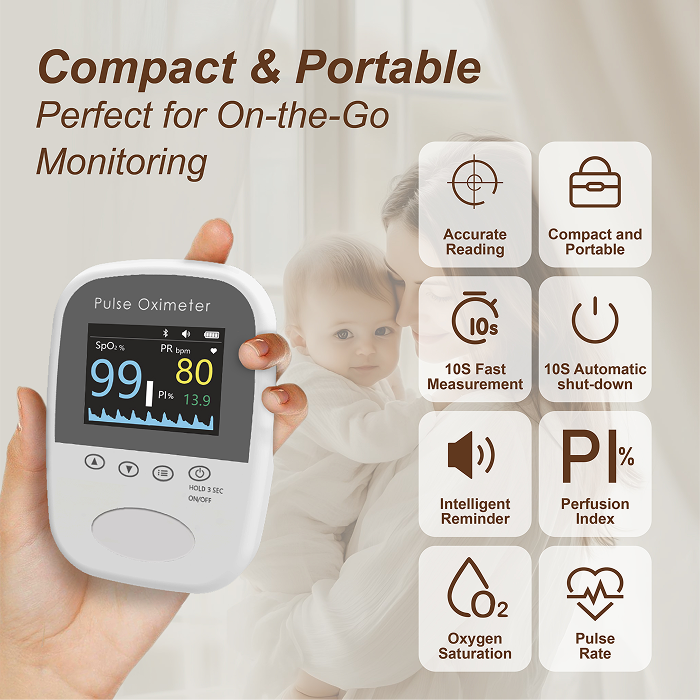
Why Choose the BM1000A?

  • FDA-Certified – Meets rigorous safety and accuracy standards
  • Comes with 3 Probes – Includes probes sized for newborns, infants, and adults, so one device grows with your family
  • Bluetooth Connectivity – Syncs with your smartphone to track readings over time
  • Easy to Use – Simple, one-button operation for stress-free monitoring
  • Accurate Readings – Designed to deliver reliable SpO2 and pulse rate measurements even on tiny fingers and toes

Whether you’re a new parent wanting extra reassurance or caring for a child with ongoing health needs, the Pepultech BM1000A gives you the tools to monitor your baby’s oxygen levels with confidence.

👉 Shop the Pepultech BM1000A Pulse Oximeter Here


Final Thoughts

Knowing your baby’s normal oxygen saturation range—and recognizing the signs of low oxygen—can be lifesaving. Remember:

  • Normal SpO2 for babies is typically 95–100% (with some variation in the first 24 hours)
  • Readings below 90–92% require immediate medical attention
  • Watch for physical signs like cyanosis, grunting, nasal flaring, and lethargy
  • A reliable pulse oximeter is a valuable tool for at-home monitoring

When in doubt, always trust your instincts and seek medical care. Your baby’s health and safety are always worth the extra caution.


Previous
Veterinary Blood Pressure Cuff Size Guide: Selecting Measurement Features for Dogs and Cats
Read More
Next
Can Small-Batch Leather Handbag Production Reduce Inventory Waste?
Read More